
Dance of the Jesters (Tchaikovsky)
from The Snow Maiden, Op. 12
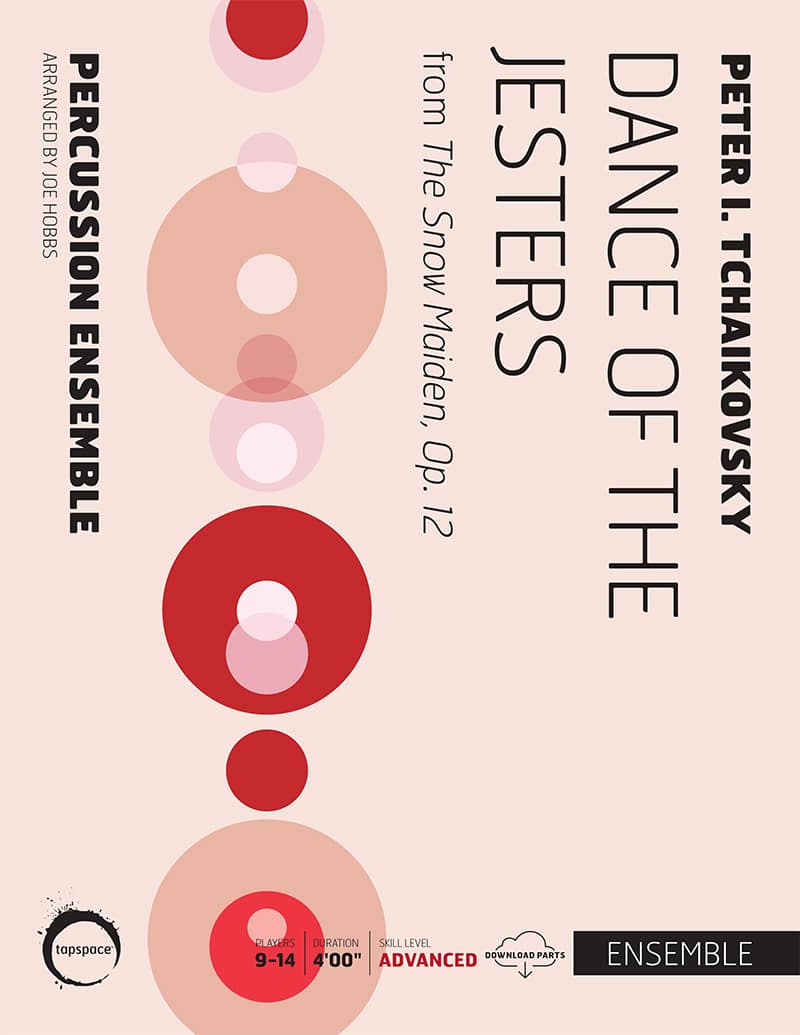
Dance of the Jesters is a lively and playful orchestral number from Peter Ilyich Tchaikovsky’s The Snow Maiden, music composed to accompany Aleksandr Ostrovsky’s musical play of the same name.
This arrangement for large percussion ensemble by Joe Hobbs perfectly captures the spirit of the original while providing an exciting challenge for the performers.
Set in presto 2/4 time, the ensemble will have its work cut out to maintain the energetic tempos with grace while blending and balancing with the melodies. Although no four-mallet technique is required, the xylophone and marimbas will encounter their fair share of fast 16th note runs.
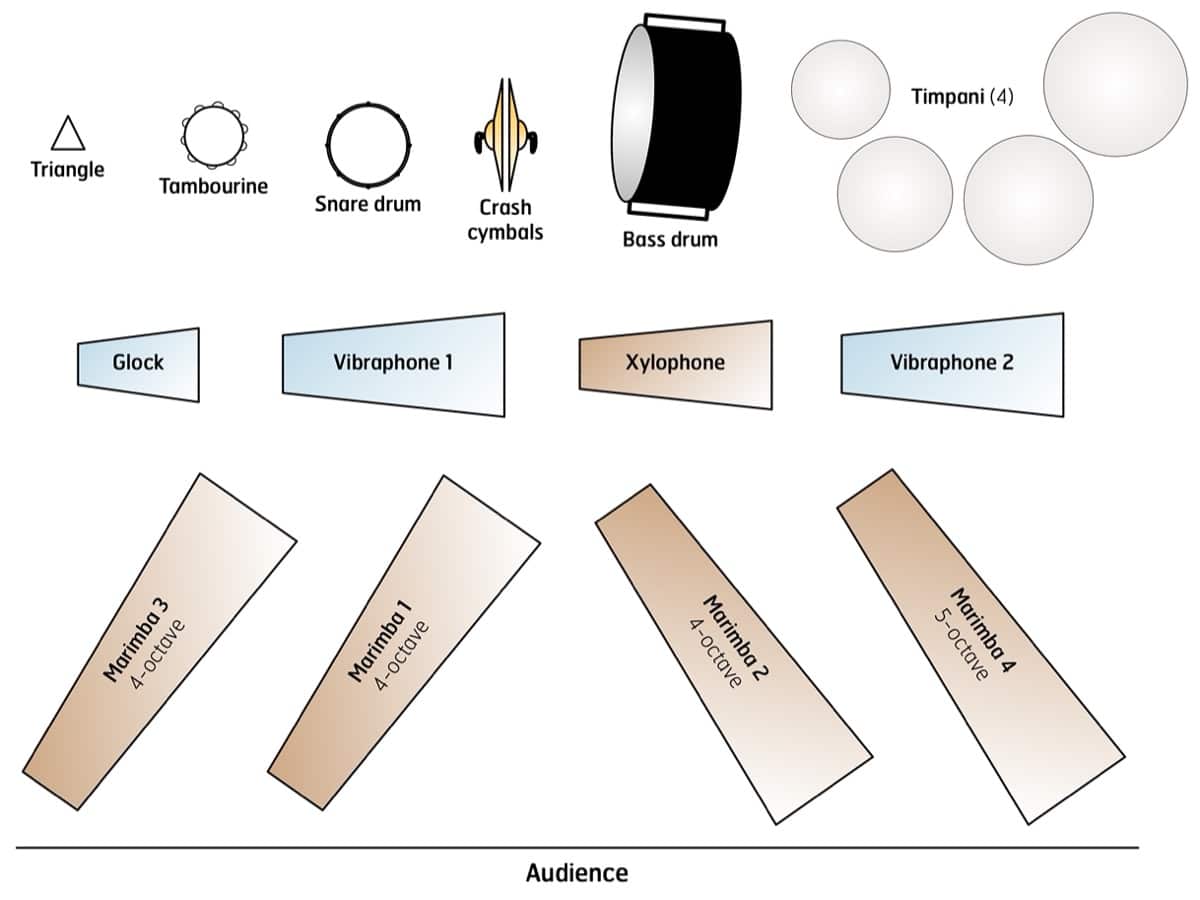
Scored for 14 players, the arrangement is also playable with nine players without the unpitched orchestral battery percussion. Playing the piece with only partial battery is not recommended.
Dance of the Jesters ships as a fully bound score and includes individual parts in PDF format for either printing or tablet viewing.
- Glockenspiel
- Xylophone
- 2 Vibraphones
- 3 Marimbas — (2) 4-octave, (1) 5-octave
- 4 Timpani
- Optional percussion: concert snare drum, concert bass drum, tambourine, triangle, hand cymbals
Reviews
Only logged in customers who have purchased this product may leave a review.







Brian Graiser –
I will always appreciate sincere efforts to introduce classical composers to new generations of musicians, and while this arrangement of Tchaikovsky’s “Dance of the Jesters” (from his opera The Snow Maiden) readily admits its connection to the conventions and forces of the large marching band front ensemble, it also offers a surprising level of stylistic integrity. With so many other arrangements of similar works available for large, advanced high school/early college percussion ensembles, this one by Joe Hobbs stands out in its thoughtfulness, attention to detail, and equitable engagement across all parts.
“Attention to detail” is, to my mind, the second- greatest strength of this four-minute work. Hobbs gives clear and simple directions for vibraphone dampening and pedaling, timpani pitch changes, and how to successfully configure the work if performers need to share instruments or combine parts. I appreciate even more the immaculately tasteful use of non-pitched percussion instruments to add a thick coating of stylistic authenticity to what might otherwise be a fairly conventional arrangement. The keyboard percussion instrument parts might be borrowed from the front ensemble, but the snare drum, tambourine, triangle, cymbals, and bass drum parts (collectively labeled as “optional,” which I urge you to ignore) seem to have been lifted from Tchaikovsky’s own manuscript. True, these are instruments that any band room should possess, but the arranger’s insistence on drawing upon their native orchestral use (as opposed to using them as a stand-in for the marching battery) elevates the entire arrangement.
There are a number of tricky spots across all parts, with demands ranging from virtuosic two-mallet licks to re-tuning of timpani and a healthy dose of uptempo syncopation, but there is thankfully plenty of room left for directors and performers to dig into the finer details of historical period, balance, and percussive color. This would be an excellent program closer for an advanced high school ensemble looking for a choppy flex with a historically knowledgeable wink.
—Brian Graiser
Percussive Notes
Vol. 63, No. 3, June 2025