
Deinde
for percussion ensemble
Jeff Ausdemore describes Deinde as a forward-looking piece that simply asks, “What’s next?” The title itself is the Latin word for “next.” This programmatic idea is explored through a sensitive harmonic language, delicate textures, and a range of emotional development. Initially somber, a persistent groove builds into an optimistic, earnest expression of hope.
On a technical level, the piece explores simple four-mallet grooves, melodic accompanying lines, and a wide variety of textures. At times, individual members of the ensemble provide tasteful colors to the sound; other times, the full group reaches grandiose peaks. Deinde is a brilliant addition to any percussion ensemble concert, sure to touch performers and audiences alike!
Deinde ships as a printed, professionally bound score, and includes individual parts in PDF format for printing or for tablet viewing.
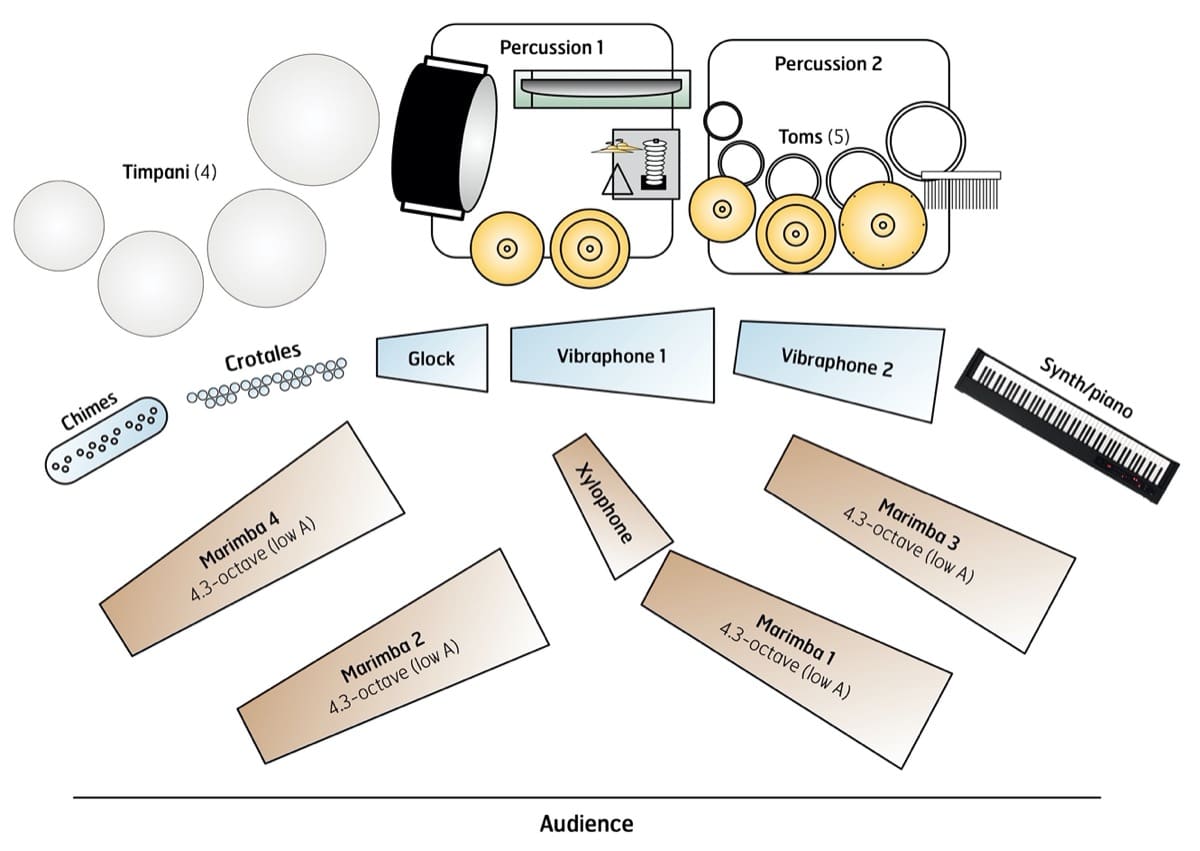
- Crotales (2 octaves)
- Glockenspiel
- Chimes
- 2 vibraphones
- Xylophone
- 4 marimbas (low A)
- 4 timpani
- Synthesizer (string and piano patches)
- Drums — concert bass drum, 5 concert toms
- Cymbals — 2 suspended cymbals*, China cymbal, large swish knocker**, tam-tam
- Accessories — finger cymbals, triangle, bell tree, mark tree
* More suspended cymbals may optionally be used for added color if available.
** May be substituted for a sizzle cymbal.
Reviews
Only logged in customers who have purchased this product may leave a review.







Jamie Wind Whitmarsh –
A colorful and energetic work, “Deinde” is scored for a modified percussion orchestra instrumentation. Primarily relying on arpeggiated harmonic content, the structure and coloration of this work is reminiscent of modern indoor drumline stylings. An interesting addition is the synthesizer. With the inclusion of the string and piano patches, the texture is altered in a way not often heard in concert music. Jeff Ausdemore is effective at incorporating the synthesizer within the scoring of the ensemble throughout the work, including a brief solo piano passage.
The range of difficulty in this work allows for more experienced four-mallet performers to play alongside those who may have less experience. While the composer writes for four marimbas, all parts are within the range of a 4.3-octave marimba. “Diende” is a fun work, moving from mystery into jubilation.