
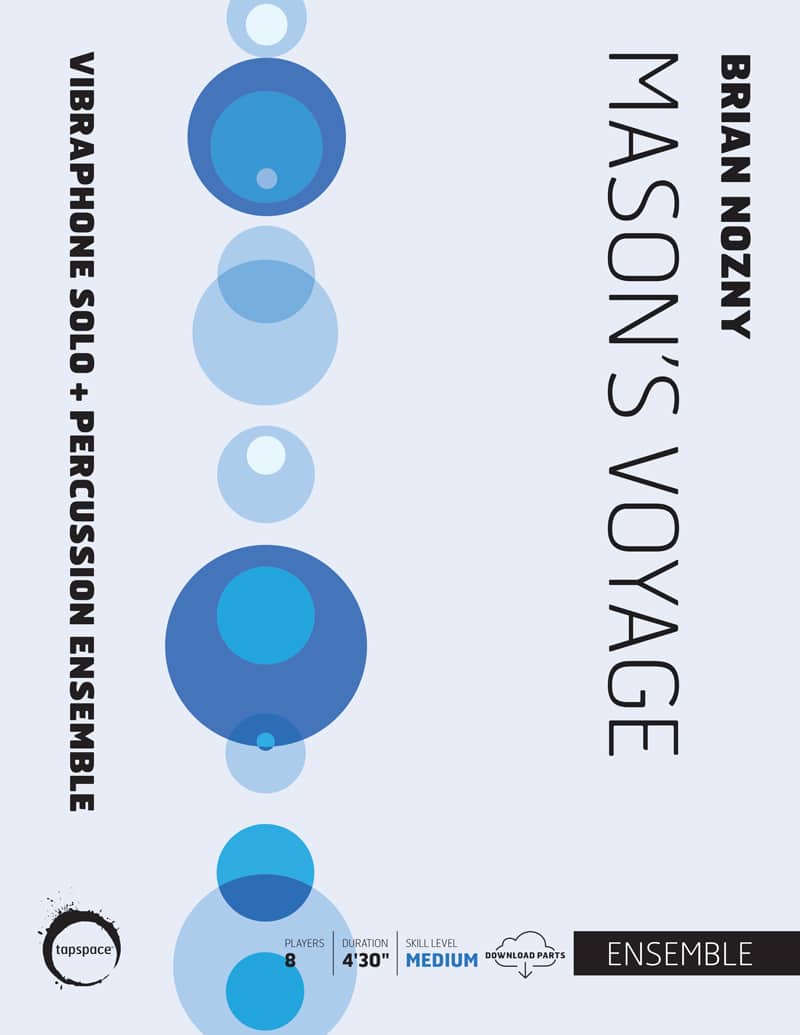
Mason’s Voyage
for vibraphone soloist and percussion ensemble
Mason’s Voyage by Brian Nozny is a light and carefree percussion ensemble with a featured vibraphone soloist. This piece draws inspiration from his prior piece, Mason’s Boat Ride and fond memories of boat excursions with his friend, Brian Mason. Mason’s Voyage is a great tool for teaching percussionists about touch and nuance while simultaneously working on macro pulse. Written in 6/8 time, the piece also features sections in 3/4 time and a blending of the two time signatures. Nozny encourages directors and students to explore different interpretations of the pulse as both an ensemble and as individuals. This eight player percussion ensemble is a jovial and refreshing work set to brighten any concert program.
Mason’s Voyage was commissioned by and is dedicated to Dr. Tim Feerst and the University of Texas Permian Basin Percussion Ensemble.
Mason’s Voyage ships as a printed, professionally bound score and includes individual parts in PDF format for printing or tablet viewing.
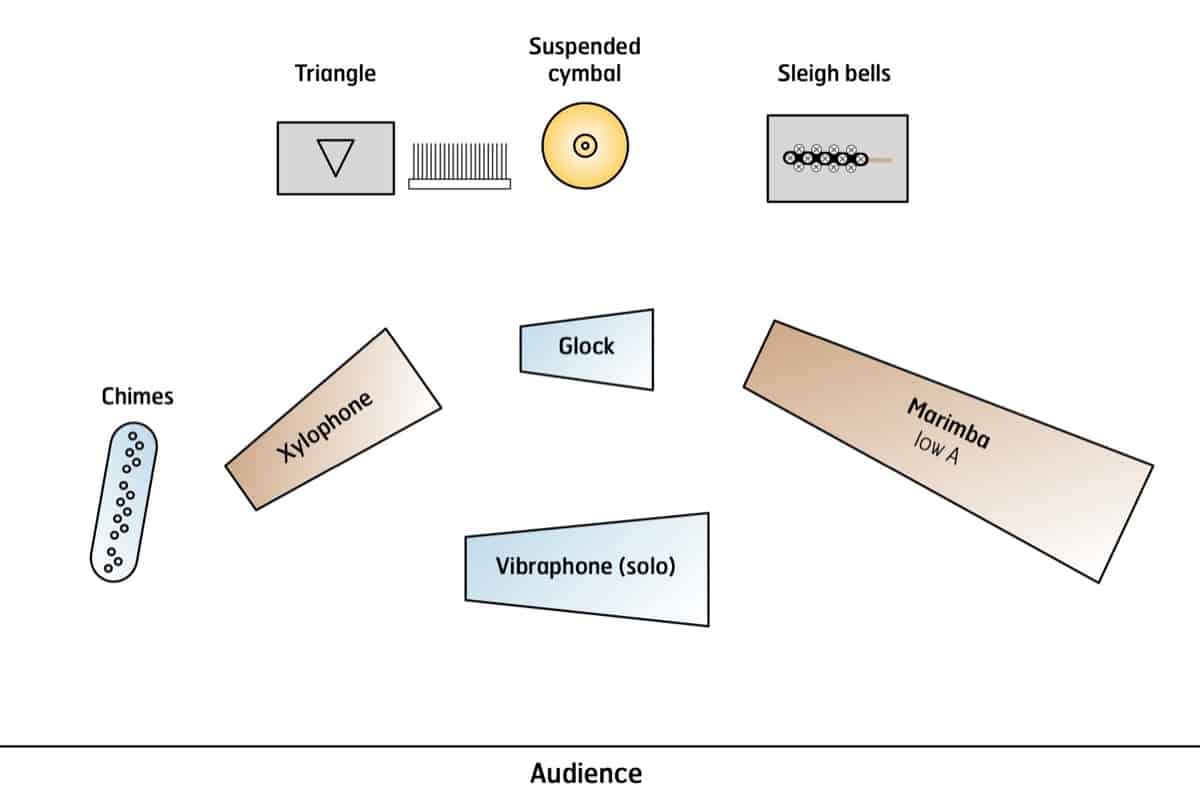
- Glockenspiel
- Vibraphone
- Chimes
- Xylophone
- Marimba — low A (optional low C)
- Percussion — triangle, suspended cymbal, sleigh bells, mark tree
Reviews
Only logged in customers who have purchased this product may leave a review.








Ben Cantrell –
This new release for solo vibraphone with percussion ensemble clocks in around 41⁄2 minutes. “Mason’s Voyage” is developed from a vibraphone solo written for The Blue Book Volume 3, “Mason’s Boat Ride,” from the same composer. The title also comes from a similarity of melody elements from Herbie Hancock’s “Maiden Voyage.”
This work is great for high school or younger university students with its rhythmic complexities, yet it’s very accessible through its instrumentation. This is especially true if you have a studio with many levels of experience and ability but want to feature a student who is excelling. It’s nice to see a piece written for soloist and ensemble that’s at a medium level for younger players.
There are no technical issues that will be tough for students. All of the keyboard parts can be played with two mallets, although the soloist may find it easier using four. The real challenge is helping students understand the feel of 6/8 and 3/4 and how they can sometimes happen simultaneously. This, of course, is up to how the conductor wants to approach this. There are lots of opportunities to switch. It’s also composed so that the only player who is playing the entire time is the soloist. Therefore, if you have students who do not have much keyboard experience, this could really help them out.
This work presents a wonderful opportunity for an ensemble to perform something different and interesting. It’s also a great chance for students to learn and grow, and for a soloist to shine.