
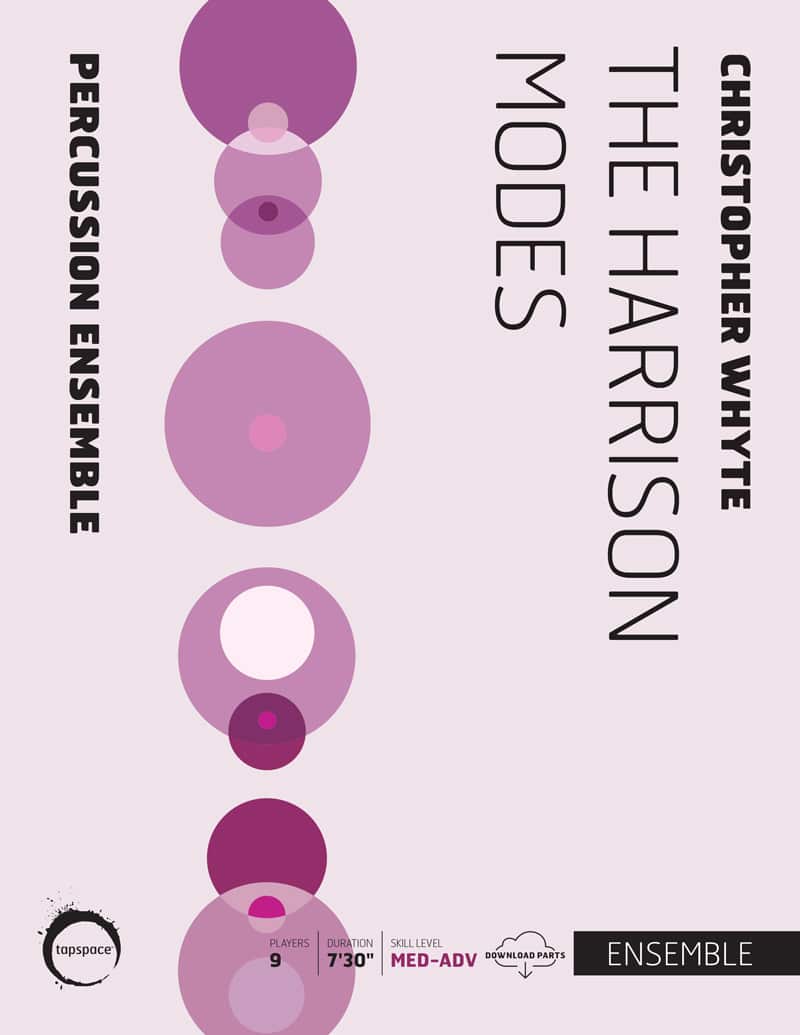
The Harrison Modes
for percussion ensemble
In The Harrison Modes, Chistopher Whyte pays homage to visionary composer Lou Harrison by way of four pentatonic modes on which Harrison heavily relied in his own compositions. These four modes appear thoughout The Harrison Modes as landmarks which delineate the four main sections of the piece.
In the spirit of Harrison’s fearlessness, Whyte explores a wide expanse of tonal varieties in standard percussion instruments, both tonal and unpitched. Use of varied implements, fingers, bows, and tuned ceramic bowls harken to sounds often found in the Harrison oeuvre. While contemporary in character, this medium-advanced ensemble for 9 players will surely captivate any audience while giving players a rich musical vehicle in which to perform.
The Harrison Modes ships as a printed, professionally bound score, and includes individual parts in PDF format for printing or tablet viewing.
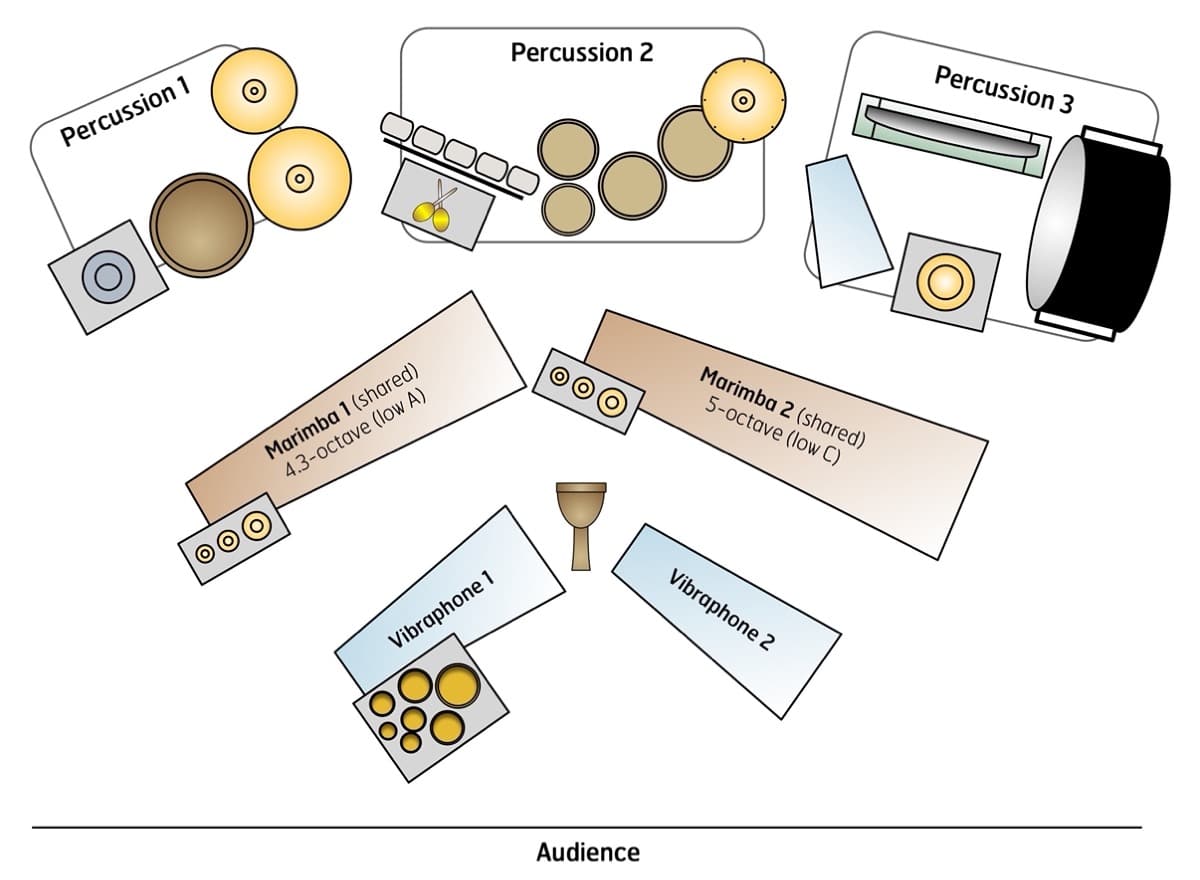
- Crotales (both octaves)
- Glockenspiel
- 2 vibraphones
- 2 marimbas — (1) low A, (1) 5-octave
- Drums — bongos, doumbek, conga (low), djembe, concert bass drum
- Gongs & cymbals — opera gong, 2 suspended cymbals (high/low), sizzle cymbal, tam-tam
- Accessories — Jal Tarang (ceramic bowls tuned with water), temple blocks, high-pitched metal, maracas
Reviews
Only logged in customers who have purchased this product may leave a review.







Hannah Weaver –
This beautiful homage to the compositional stylings of Lou Harrison blends the sounds of classical percussion instruments such as marimba and vibraphone with Eastern influences such as doumbek, opera gong, and Jal tarang. This wide collection of timbres is heightened by the use of unusual implements, such as fingers on vibraphone, tin foil on vibraphone, bows on marimba, and metal dreadlocks on cymbals. The composer further evokes the sonic world of Harrison through the use of the four pentatonic modes that Harrison utilized for many of his compositions: 1–flat 3–4–5–flat 7, 1–2–flat 3–5–flat 6, 1–3–4–5–7, and 1–2–4–5–flat 7.
Beginning with a cantabile solo line played with fingers on the vibraphone, the piece builds slowly in intensity. Bowed vibraphone and marimba sounds join the solo line, and then cymbals and drums begin to interject. The energy continues to build as the mallet parts become more active and dense, until the piece erupts in a cascade of sixteenth notes in the mallets while the drums play polyrhythmic gestures of 4:3 and 3:2 (another nod to Harrison and his fascination with Pythagoras and just intonation).
The piece evolves through the use of modes, with each new formal section marked by a different mode. After a dramatic climax and grand pause, the piece gradually fades away, mirroring the opening. The vibraphone and marimba players have sparse, improvisatory gestures played with fingers, and a final chord on bowed crotales closes the piece in an ethereal manner.
“The Harrison Modes” was originally written for the Mountain View High School Percussion Ensemble. While the technical proficiency required for the piece could be achieved by high school students, some of the gear required will likely not be available to high school programs. However, the piece is an excellent introduction to one of the most significant composers in the percussion canon and would be a valuable pedagogical tool for intermediate to advanced high school and college students.